The Dangers of Freon Disposal & How to Dispose of It Properly with Steel Young
If your business handles HVAC systems, refrigerators, freezers, or any cooling equipment, there is a good chance you have encountered Freon — the common name for a group of chemical refrigerants. What many businesses don’t realize is that improper Freon handling carries serious health risks, steep federal penalties, and environmental consequences that extend far beyond your facility. Here is what you need to know.
What Is Freon Doing to Our Environment?
Freon belongs to a class of chemicals known as chlorofluorocarbons (CFCs) and hydrochlorofluorocarbons (HCFCs). When released into the atmosphere, these compounds rise to the stratosphere and break down the ozone layer — the Earth’s natural shield against harmful ultraviolet (UV) radiation.
| ENVIRONMENTAL RISK Ozone layer depletion caused by Freon and similar refrigerants leads to increased UV radiation reaching the Earth’s surface, raising risks of skin cancer, cataracts, and harm to ecosystems and agriculture. |
This is not a future concern — it is an ongoing one. That is exactly why federal law treats the improper release of refrigerants as a serious violation, not just a minor infraction.
Health Hazards: What Exposure to Freon Can Do to You
Beyond the environmental impact, direct exposure to Freon poses real risks to the people handling it, especially during Freon disposal. Even brief exposure in an enclosed space can cause symptoms including:
- Dizziness and disorientation
- Shortness of breath and respiratory irritation
- Headaches and nausea
- Skin and eye irritation on direct contact
- At high concentrations — loss of consciousness
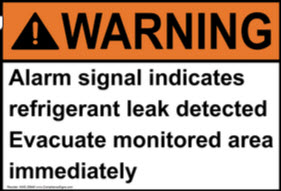
Freon is heavier than air, which means it settles in low-lying spaces. Workers in basements, crawl spaces, or mechanical rooms are at elevated risk if a leak occurs.
Know the Law: The Clean Air Act & EPA Section 608 Certification
The handling of refrigerants in the United States is strictly regulated under the Clean Air Act, Section 608. This federal law mandates that any individual who removes or services refrigerants from equipment must hold an EPA Section 608 Certification. This certification is not optional — it is a federal requirement, and working without it is a violation of law.
| EPA SECTION 608 CERTIFICATION REQUIRED Any individual removing Freon or other refrigerants from equipment must hold a valid EPA Section 608 Certification. Allowing uncertified personnel to remove or vent refrigerants — even accidentally — can result in EPA fines of thousands of dollars per day, per incident. |
The purpose of this certification is clear: to ensure that only trained, knowledgeable individuals handle refrigerants, preventing the accidental or intentional release of substances that damage the ozone layer and harm human health.
| Steel Young LLC Has EPA Section 608 Certified Technicians Compliance starts with having the right people. Steel Young LLC has EPA Section 608 certified technicians who can remove Freon from your equipment as part of our commercial recycling service. When we process your equipment, our certified team handles refrigerant removal safely and in full compliance with federal law — so you don’t have to find, hire, or coordinate a separate contractor. One call covers it all. |
Protecting Your Workers: Required Safety Gear
Any time Freon is being removed or handled, proper personal protective equipment (PPE) is non-negotiable. At minimum, workers should wear:
- Gloves — prevent skin contact and chemical burns from liquid Freon
- Safety Goggles — protect eyes from accidental spray or vapor exposure
- Respirator Mask — reduce inhalation risk in low-ventilation environments
These are baseline protections. Depending on the volume of refrigerant being handled and the ventilation of the work area, additional respiratory protection may be required.
The Right Equipment for Safe Extraction
You cannot simply drain Freon the way you would drain an oil pan. Refrigerant extraction requires certified recovery equipment specifically designed for the job:
- A refrigerant recovery machine that captures the gas without releasing it into the air
- An approved recovery cylinder — not just any tank — rated and labeled for refrigerant storage
- Proper fittings and hose connections compatible with the refrigerant type
Using improper containers or incomplete extraction methods is both a safety hazard and a federal violation. Recovery cylinders have specific pressure ratings and markings; using the wrong tank can result in dangerous over-pressurization.
| STEEL YOUNG HANDLES THIS FOR YOU Our EPA Section 608 certified technicians have all required recovery equipment and approved storage cylinders. You don’t need to source specialized tools or worry about certification compliance — we have everything needed to safely extract refrigerants before your scrap equipment is recycled. |
What to Do with Extracted Freon: Your Two Options
Once Freon has been safely recovered into an approved cylinder, businesses have two responsible paths for disposal:
| OPTION 1 Certified Disposal Facilities Contact your local waste management service or a licensed hazardous waste facility. They can provide specific guidelines for your refrigerant type and ensure it is destroyed or handled in compliance with EPA standards. | OPTION 2 Sell It for Recycling Many companies specialize in reclaiming and recycling used refrigerants. Recovered Freon — especially older types like R-22 — can hold real resale value. This is often the most cost-effective and environmentally responsible choice. |
| PRO TIP Before scrapping any equipment that may contain refrigerants, confirm that Freon has been properly extracted and documented by an EPA Section 608 certified technician. Steel Young LLC has these certified technicians and handles this step as part of our commercial recycling process. |
The Bottom Line
Freon is not something to improvise with. Between the environmental damage it causes, the health risks it poses to your workers, and the legal liability that comes with mishandling it, proper refrigerant management is simply part of doing business responsibly.
The law is clear: only individuals holding an EPA Section 608 Certification may remove refrigerants from equipment. Steel Young LLC has these certified technicians, and Freon removal is handled as part of our commercial recycling service. One call. Full compliance. No headaches.
| Ready to Recycle? Let Our Certified Team Handle It All. Steel Young LLC has EPA Section 608 certified technicians who can remove Freon as part of our commercial scrap metal recycling service. We serve businesses anywhere in the United States with transparent pricing and a Letter of Assured Destruction on every job. Contact us today: steelyoungllc.com/contact-us |