
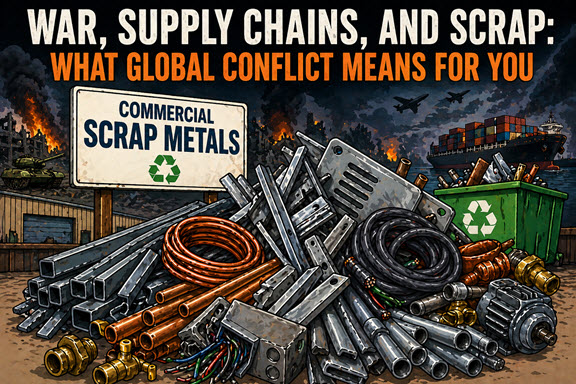
War, Supply Chains, and Scrap: What Global Conflict Means for Your Metal Supply
Global conflicts in Ukraine and the Middle East are doing more than reshaping geopolitics—they’re directly impacting how businesses source, price, and secure metal.
For manufacturers, contractors, and industrial buyers, the takeaway is clear: scrap metal is becoming a more important—and strategic—part of your supply chain.
How Are Global Disruptions Affecting Metal Supply?
Ongoing conflict has reduced the global availability of key raw materials like steel inputs, aluminum, and copper. At the same time, shipping disruptions and rising energy costs are making imported metals more expensive and less predictable.
For your business, this means greater reliance on U.S.-sourced scrap metal, more competition for available material, and a growing need for reliable recycling partners.
Scrap is no longer just an alternative—it’s becoming a primary, dependable source of supply.
What is the Wars Impact on Scrap Metal Recycling Pricing?
Steel producers are increasingly turning to scrap to replace disrupted imports. This is helping maintain availability, but it comes with pricing uncertainty.
For buyers of steel and ferrous materials, scrap-based supply is supporting production continuity. However, prices may fluctuate due to global economic slowdowns affecting construction and manufacturing, as well as ongoing supply constraints.
You should expect price volatility, even when supply appears steady.
Why Are Non-Ferrous Metals Getting More Expensive?
Non-ferrous metals—especially aluminum and copper—are under increasing pressure.
Higher global energy costs are driving up the price of new aluminum, making recycled aluminum a more attractive option due to its lower cost and faster availability. At the same time, supply chain uncertainty and processing disruptions are tightening copper markets, increasing the value of scrap copper as a reliable source.
As a result, businesses should expect higher prices and stronger competition for non-ferrous materials.
How Are Energy Costs Impacting Metal Recycling Pricing?
Rising fuel and electricity costs are affecting every stage of the recycling process, from collection and transportation to processing and delivery.
For your business, this may mean higher material costs, wider regional price differences, and increased importance of supplier proximity and efficiency.
Working with local or regional recyclers can help control costs and reduce delays.
Why Is Domestic Sourcing Becoming More Important?
With global trade less predictable, more material is staying within the United States. This is strengthening domestic recycling as a key part of industrial supply.
For commercial customers, this creates an opportunity to secure more consistent material streams while reducing exposure to international disruptions. It also increases the importance of building long-term relationships with reliable suppliers.
Scrap recycling is evolving into a strategic supply channel, not just a spot-market purchase.
What Does the War Mean for Scrap Metal Recycling Moving Forward?
Global conflict is accelerating changes that directly impact how you source and budget for metal.
Ferrous metals remain generally available but can experience price swings. Non-ferrous metals are seeing tighter supply and rising costs. Across all categories, volatility and competition are increasing.
To stay ahead, businesses should diversify sourcing through trusted recycling partners, plan for price fluctuations—especially in non-ferrous metals—and prioritize domestic, energy-efficient supply options.
In today’s market, scrap metal is not just recycled material—it’s a reliable, strategic resource that can help protect your operations from global uncertainty.